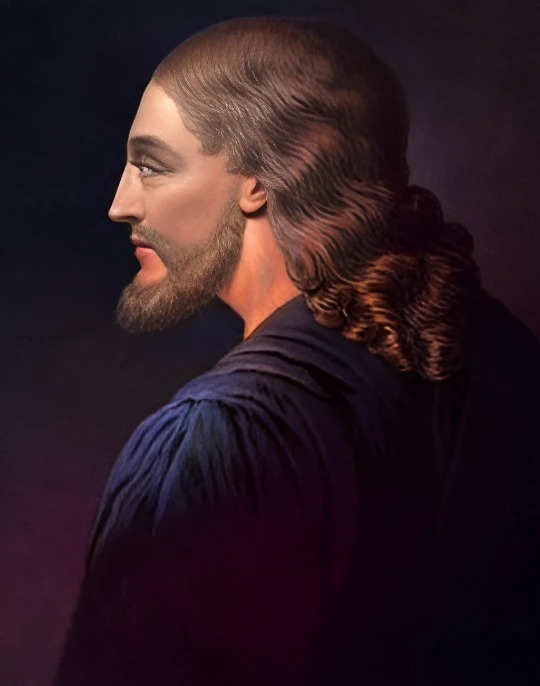
The true story of the life of Jesus of Nazareth has never been revealed to the world, neither in the accepted Gospels nor in the Apocrypha, although some clues can be found in some of the commentaries written by the pre-Nicene Fathers.
The facts relating to His identity and mission are among the priceless mysteries preserved to this day in the secret vaults beneath the “Houses of the Brothers.”
For some of the Knights Templar, who were initiated into the arcana of the Druze, Nazarenes, Essenes, Johannites, and other sects that still inhabited the remote and inaccessible fortresses of the Holy Land, part of the strange story was told.
Jesus Christ: The V.M. Jeshua Ben-Pandira
The figure of Jesus Christ is one of the most complex and influential in all of human history.
For Orthodox Christianity, he is the Son of God made man; for history, a Jewish teacher and reformer; Among Gnostics, he is known as the Venerable Master (V.M.) Jeshua Ben-Pandira, an awakened Being who perfectly embodied the principle of the “Cosmic Christ.”
An exploration of his life, name, and legacy, uniting historical perspective with Gnostic and spiritual vision.
The Origin of His Name
The name by which we know him is a combination of terms with profound theological and historical meanings:
- Jesus (Jeshua/Yeshua): Originates from the Hebrew Yehoshua (or its shortened form Yeshua), meaning “Savior” or “God saves.”
- Christ: Not a surname, but a title. It derives from the Greek Christos, which is the exact translation of the Hebrew term Mashiach (Messiah), meaning “The Anointed One.” A Cosmic and Universal principle. One of the three forces of creation.
- Jeshua Ben-Pandira: In ancient Jewish Talmudic tradition, there is mention of a “Yeshu ben Pantera” (Jesus, son of the Panther). Later, Gnostic and esoteric currents adopted the name “Jeshua Ben-Pandira” to refer specifically to the man, the Bodhisattva or Master of Compassion who walked on Earth, distinguishing the human vehicle from the universal cosmic force (the Christ) that he embodied.
Origin, Era and Parents
- Era: He lived in the 1st century AD, during the Roman Empire. It is believed that he was born between 6 BC and 4 BC (due to calculation errors in the formulation of the Gregorian calendar) and died around 30-33 AD.
- Origin: A Jew from Galilee, in the region of Judea (present-day Palestine/Israel). Tradition points to his birth in Bethlehem and his youth in Nazareth.
- Parents: Historically and biblically, he is the son of Mary and Joseph (a carpenter). In Gnosticism, Mary and Joseph also represent profound spiritual archetypes—Mary as the representation of the Divine Mother or the passive/receptive force, and Joseph as the Master who guards and guides the initiate.
Who He Was
The answer varies depending on the lens through which we observe him:
- In History: He was an itinerant spiritual leader, a healer, and a Jewish teacher who challenged the rigid and hypocritical structures of the religion of his time, which ultimately cost him his life on the cross by order of Pontius Pilate.
- In Gnosticism and Esotericism: Jeshua Ben-Pandira is seen as the highest of the Ascended Masters. He was not the only “Christ,” but rather the individual who achieved the most perfect degree of “Christification.” According to this view, he prepared his inner vehicles (physical, vital, astral, mental, and causal) through intense spiritual and alchemical work, becoming capable of anchoring the light of the Logos (the Solar Christ) on Earth.
What was his Mission and Teaching?
Jesus’ mission had a dual character (exoteric and esoteric):
Exoteric Teaching (Public): Based on the revolution of love. He taught forgiveness, compassion, charity, and that “the Kingdom of God is within you.” He broke the idea of a punitive God, replacing it with the figure of a loving “Father” (Abba).
Esoteric Teaching (To the Initiates/Gnostics): His mission was to leave a living map of Spiritual Initiation. According to Gnosticism, his teachings focus on three main factors:
- Psychological Death: The elimination of the ego, defects, and animal passions.
- The Spiritual Birth: The sacred use of creative energies (alchemy) to create the “solar” or existential bodies of the Being.
- The Sacrifice for Humanity: Selflessly giving light and knowledge (Gnosis) to others. The Stations of the Cross and the resurrection are seen not only as historical events, but as symbols of the inner process that every initiate must undergo.
What is His Legacy for Humanity?
Jesus’ legacy is incalculable:
- Cultural and Civilizational: He forever transformed Western history. His values of equality, compassion for the marginalized, and love for one’s neighbor shaped the foundations of Human Rights, ethics, and modern laws. He divided human time into “Before and After” his existence.
- Spiritual: He created Christianity, the religion with the largest number of followers in the world.
- Gnostic Legacy: He established the “Cosmic Drama”. For the Gnostics, their life is not merely something to be worshipped, bu
Conclusion
Whether approached through historical, religious, or esoteric lenses, the figure of Jesus—also referred to in some traditions as Jeshua Ben-Pandira—represents a universal archetype of transformation.
His life and teachings continue to guide millions in the search for truth, inner awakening, and the realization of a higher spiritual reality.

 Albanian
▾